Systemic Lupus Erythematosus (Lupus)
Systemic Lupus Erythematosus (Lupus)
Systemic lupus erythematosus (lupus) happens when the body’s defense system attacks healthy cells and tissues, instead of viruses and bacteria. This can damage many parts of the body such as the:
- Joints
- Skin
- Kidneys
- Heart
- Lungs
- Blood vessels
- Brain
You can’t catch lupus from another person. If you have lupus you will have periods of illness (flares) and wellness.
Anyone can get systemic lupus erythematosus (lupus), but it most often affects women. Lupus is also more common in African American, Hispanic, Asian, and Native American women than in Caucasian women.
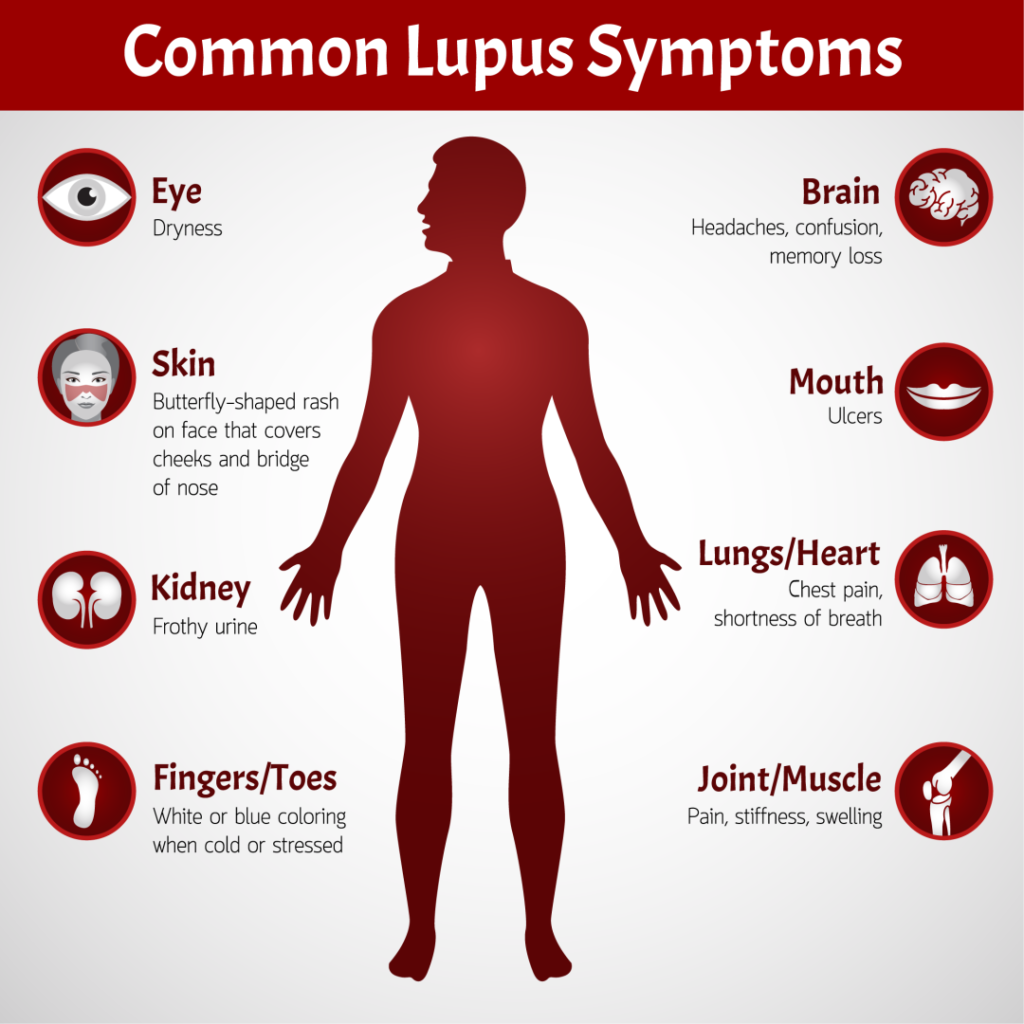
Symptoms of lupus vary, and they may come and go. The times when a person is having symptoms are called flares, which can range from mild to severe. New symptoms may appear at any time.
Some of the most common symptoms of lupus are:
- Pain or swelling in the joints
- Muscle pain
- Fever with no known cause
- Red rashes, most often on the face
- Chest pain when taking a deep breath
- Hair loss
- Pale or purple fingers or toes
- Sensitivity to the sun
- Swelling in the legs or around the eyes
- Mouth sores
- Swollen glands
- Feeling very tired
Less common symptoms include:
- Anemia (a decrease in red blood cells)
- Headaches
- Dizzy spells
- Feeling sad
- Confusion
- Seizures
Your doctor will develop a treatment plan to fit your needs. You and your doctor should review the plan often to be sure it’s working. You should report new symptoms to your doctor right away so that treatment can be changed if needed.
Treatments may include:
- Medicines to:
- Reduce swelling and pain.
- Prevent or reduce flares.
- Help the immune system.
- Reduce or prevent damage to joints.
- Balance the hormones.
- Treat problems related to lupus, such as high cholesterol, high blood pressure, or infection.
- Alternative treatments may improve symptoms. No research shows that this kind of treatment works for people with lupus. You should talk to your doctor about alternative treatments.
There is no single test to diagnose systemic lupus erythematosus (lupus). It may take months or years for your doctor to diagnose the disease. Your doctor may use many tools to make a diagnosis:
- Medical history.
- Complete physical exam.
- Samples from the blood, skin, or kidneys for laboratory tests.
Prepared by:
NIAMS Information Clearinghouse
National Institutes of Health
Bethesda, MD 20892-3675
NIAMS Clearinghouse information specialists are trained to assist callers and provide other sources of information; however, they are not healthcare professionals. The information they provide cannot substitute for the medical expertise and advice that resides with your primary healthcare provider. Information specialists do not provide medical advice or referrals. The NIAMS encourages you to consult your primary healthcare provider to discuss information you find on our site. The NIAMS does not endorse or recommend any commercial products, processes, or services. Brand names may be included in documents on this site. These are provided as examples only, and their inclusion does not mean that the NIAMS, the NIH or any other government agency endorses them. Also, if a particular brand name is not mentioned, this does not mean or imply that the product is unsatisfactory.
All NIAMS-prepared information is in the public domain and may be freely copied. Credit to the NIAMS or the NIH is appreciated Where to find on the internet: https://www.niams.nih.gov/health-topics/lupus